'ACTA a web police project' - MEP who wants to kill bill
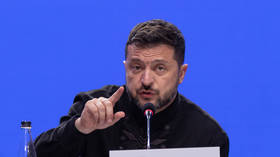
Published 19 Apr, 2012 13:43 | Updated 20 Apr, 2012 12:11ACTA is aiming high, but its loose wording would make internet service providers an unintended police force of the web, David Martin, the MEP rapporteur on the controversial agreement told RT in an exclusive interview.
The trade agreement needs the consent of the European Parliament to come into force. A vote on it is due this summer, but David Martin who is responsible for monitoring its progress and reporting on it to the European Parliament has already said it should be rejected.RT: What exactly worries you about the ACTA agreement?David Martin: In terms of what ACTA was trying to achieve, I’m quite happy with it. I think it’s important that Europe does protect its intellectual property. But it had a number of unintended consequences. One was it would put a duty on internet service providers to effectively act as a European police force of the internet. I don’t think that’s right. I think that’s for the formal judicial authorities. Second, I did not like the idea that ACTA could possibly have criminalized young people who are quite innocently downloading films and music in the privacy of their own homes. ACTA says it should only be for commercial purposes, but “commercial purposes” are very weakly defined.My third concern was that this was a treaty with a limited number of countries, 37, all of them very significant countries, but it excludes China, India and Russia. I think we should have gone for a multilateral settlement. RT:Your recommendation might kill ACTA, but plans for a replacement have already been leaked. Do you think your concerns will be taken into account?DM: I hope so. One of the things we need to do in any future treaty is to separate two very different kinds of goods. ACTA tried to deal with counterfeit goods – real physical goods – in the same treaty as it dealt with internet goods, the virtual [ones]. I don’t think the two are meant for the same treatment.The “counterfeit” generally means that someone has been coned. They have been presented with a good as if it was an original. [People would buy] that good thinking it was an original.That is very different from someone downloading a tune on the internet, where they know who the product is coming from. So they are different concepts and they should be treated differently. I think we also need situation where we move toward world agreement in terms of how we handle intellectual property.People often say it’s an equivalent of going into the record store and stealing a CD, going on to the internet and stealing a tune. I don’t believe they are the same.I think they are very different concepts. I think we have to try and preserve any future changes, the right of access to the internet, with compensation, with benefits for the rights holders. RT: What do you think of the apparent haste and secrecy, with which most European governments signed up to ACTA, despite its flaws?DM: It is the other concern people have about it. It was negotiated over a five to six year period behind closed doors. The rights holders seem to be involved in that discussion, but the civil society [was not] a part of that discussion. Most member states apparently did not really understand what they were signing up for. I mean, the British House of Commons had a one-line report on ACTA, which said that ACTA did not merit a debate on the floor of the House of Commons. It actually demonstrates the importance of the European Parliament in the European decision-making process. Because without the European Parliament ACTA would probably now be law and we wouldn’t be having this discussion. RT:Despite all of ACTA's faults, the protection of intellectual property is a critical issue for Europe. Could it be that security it would bring would outweigh its shortcomings?DM: I do think Europe has a duty to protect its intellectual property. Europe is not rich in raw materials; we cannot compete on the global scale on the basis of low wages, so we compete on the basis of our innovation and our invention. We have to protect that innovation and invention in the global marketplace. But ACTA didn’t, in my opinion, achieve that. It was described as a “coalition of the willing”. [It] only involved countries that already have very high levels of intellectual protection.Indeed the great boost that virtually every member state has signed up for ACTA is that it doesn’t change the domestic law. Well, if it doesn’t change the domestic law, what benefit does it bring? Of course the argument brings international cooperation. But that international cooperation, I think, has to be done on regulated basis, has to be done on multilateral basis.It cannot be done behind closed doors by selected group of countries, a self-selected group of countries.
Acta-vism
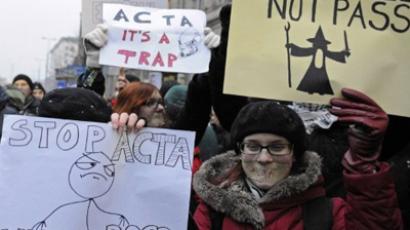
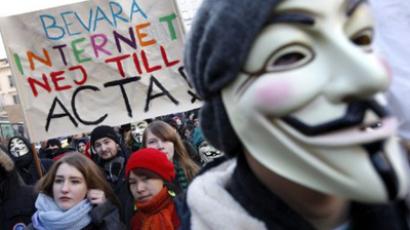
ACTA is an international agreement aimed at protecting intellectual property. It somewhat resembles the US’s Stop Online Piracy Act (SOPA), which was shelved by lawmakers after protests.The US, most of the EU, Australia, Canada, Japan and several other countries have signed the ACTA treaty, but none of these signatories has yet ratified it. This last step would make the agreement viable. As soon as ACTA is ratified by any six countries, the convention will come into force.ACTA sparked anger among Europeans, with thousands protesting against giving big firms the power to ban people from using the Internet for illegally swapping files. Twenty-two countries in the bloc signed up to the agreement, with a vote on its ratification due this summer in Brussels.